
Das Lower Value Human Kapital
How a banker, a jeweller and Karl Marx found common ground in the age of AI

In 1991, Gerald Ratner lost his job and the best part of a billion pounds with a few words.
Standing in front of his peers, the Chairman of the Ratners Group explained that he could sell jewellery so cheaply “because it is total crap”.
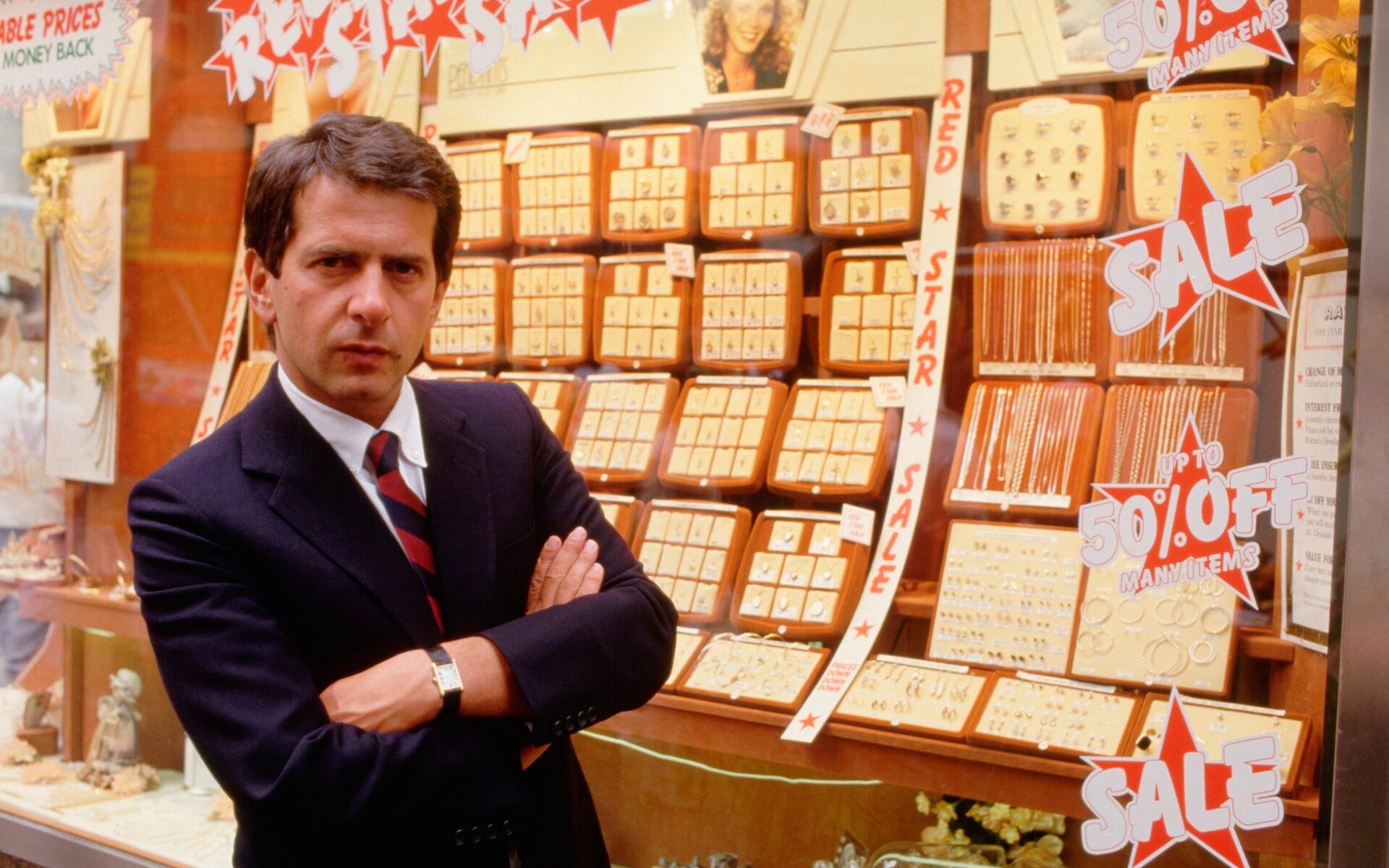
Credit: Christopher Cormack/Corbis
Decades of work building Ratners, H. Samuel, Ernest Jones, Leslie Davis and Watches of Switzerland into High Street staples evaporated as he kept digging: “[our earrings] are cheaper than a prawn sandwich from Marks and Spencer’s but I have to say the sandwich will probably last longer”.
Those jokes, which he added to the speech after others had given it the all-clear, went down well in the room. People understood that his tongue was firmly in his cheek and many of them likely recognised the business model!
However, the UK’s tabloid journalists have never had much need for context or nuance and splashed the story as an insult to the company’s customers.
‘Doing a Ratner’ entered the English language as its inventor exited stage left.
Since then, many Masters of their Universes have followed Ratner over the top into PR no man’s land and suffered similar fates: Chip Wilson (Lululemon), David Shephard (Topman) and Gregory Rayburn (Hostess) to name just a few men.
And we may have another entry on the honours board.
Bill Winters is (currently) the Group Chief Executive Officer of British-based bank Standard Chartered and a couple of weeks ago, Bill, like Gerald was presenting to friends.
During his bank’s Investor Day in Hong Kong, he concluded his description of implementing a recent Artificial Intelligence project by saying:
“So this isn't, it's not cost cutting. It's replacing, in some cases, lower value, human capital, with the financial capital and the investment capital that we're putting in.”
What was music to the few well-off ears in the audience who provide the financial heft to develop the AI models, struck a discordant note with the thousands of Standard Chartered employees around the world who wondered if they were one of the ‘lower value human capital’?
The phrase was clumsy at its very best and drew criticism from many commentators.
At its worst it lays bare the truth that rarely speaks its name so publicly: that, in time many hundreds of thousands (possibly millions?) of people will be replaced by AI.
We all know this but like all bad news, we prefer to ignore it.
However, I suspect that Mr Winters will escape the same axe that he has predicted for so many of his colleagues. He will not be ‘Doing a Ratner’. After a dip on the day of the comments, the share price of Standard Chartered has continued on its path to an all-time high (at the time of writing).
The market liked what it heard.
An unlikely source of evidence for why this message was met with approval could come from Karl Marx: him of the huge head in Highgate cemetery and well, Marxism.
Das Kapital explains that a worker sells their labour to an employee for a wage. Marx argued that during the working day, that worker creates more value than that wage costs the company and hence a profit is created.
The company keeps the profit and competition in the marketplace drives the company to continuously try to increase this ‘surplus value’ by increasing the efficiency of output and / or reduce costs.
Costs such as wages.
I would lay decent odds that Mr Winters the Banker does not consider himself a Marxist economist but his ‘lower value human capital’ is a brilliant articulation of that economic treatise.
Marx acknowledged that capitalism generated unprecedented wealth but as the worker becomes an “appendage to the machine” that wealth becomes ever more concentrated in to the hands of those who control the financial capital.
When the worker is the machine, will Marx’s prediction that the ‘accumulation of wealth at one pole is, therefore, at the same time accumulation of misery… at the opposite pole" come true?
If Ratner’s mistake was telling customers that his products were worth less than they believed was Winters’ mistake telling his employees the same thing about themselves?
I suspect that the lower value human capital of the world are united in their anticipation to find out.